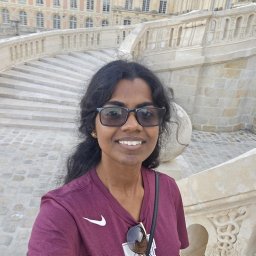
Niruthiha Selvanayagam
pronounced ni-ru-thi-ha
Empirical software engineering researcher at ÉTS Montréal, studying how we build AI & ML systems (SE4AI), with an interest in AI safety.
I study how developers build, maintain, and reason about AI-powered software systems. My research sits in empirical software engineering, with a focus on ML-enabled and agentic software systems: how they are developed in practice, where they fail or are misused, and what kinds of tools, methods, and requirements can better support developers. I use empirical methods such as mining software repositories, analyzing real-world codebases, and studying developer practices.
I'm a PhD researcher at ÉTS Montréal, advised by Taher A. Ghaleb and Manel Abdellatif. My recent work studies self-admitted technical debt in LLM software and detecting misuses of machine-learning services. I'm also interested in AI safety, including evaluation benchmarks and the adversarial robustness of language models, as in FragBench (work done with the SPAR program).
I also build applied ML systems: NLP models, graph neural networks, retrieval-augmented generation, and LLM fine-tuning. They keep me close to the engineering challenges I study.
Education
- Ph.D. in Engineering (Software Engineering), École de technologie supérieure (ÉTS), Montréal. 2025 to 2029 (expected).
- M.S. in Information Systems (Data Science), Northeastern University, Boston. 2025.
- B.Sc. in Mathematics, University of Toronto. 2023.
News
- Aug 2026 AI-to-AI Code Review of GitHub Pull Requests accepted to the ESEM 2026 Emerging Results, Vision, and Reflection track (ESEIW 2026) in Munich, Germany.
- May 2026 Awarded a Mitacs Globalink Research Award ($6,000) for a research collaboration with Prof. Christian Kästner at Carnegie Mellon University on quality assurance for ML-enabled systems.
- May 2026 Named one of 30 winners of ÉTS's 7th Palmarès Féminin pluriel (Women's Plural Awards), a $1,000 recognition celebrating inspiring women students in engineering.
- May 2026 FragBench preprint released on arXiv.
- Apr 2026 Does the Agent Matter? Predicting Merge Outcomes of AI-Authored Pull Requests accepted to the FSE 2026 Student Research Competition.
- Jan 2026 Joined the SPAR program (AI safety research).
- Dec 2025 Two papers accepted at IEEE SANER 2026 (technical debt in LLM software; ML-service misuse detection).
- May 2025 Started my PhD in software engineering at ÉTS Montréal.
- Apr 2025 Inducted into Northeastern University's Laurel & Scroll 100 (Information Systems, MS '25).
- Mar 2025 ICHI paper accepted (analysis of specific language impairment via unsupervised learning).
- Jan 2025 Joined the Vector Institute as a Machine Learning Associate intern, working on Hapi AI.
- Sep 2024 Began serving as a teaching assistant for graduate courses on generative AI.
Publications
C# conference paper PP# preprint
-
PP1
FragBench: Cross-Session Attacks Hidden in Benign-Looking Fragments.
2026.
[arXiv]
* Equal contribution. Work done in the SPAR program with David Williams-King and Linh Le.
- C5 AI-to-AI Code Review of GitHub Pull Requests. 20th ACM/IEEE Int. Symposium on Empirical Software Engineering and Measurement (ESEM), Emerging Results, Vision, and Reflection Track, 2026. [details]
- C4 Does the Agent Matter? Predicting Merge Outcomes of AI-Authored Pull Requests. FSE 2026 Student Research Competition (SRC), 2026. [details]
- C3 Self-Admitted Technical Debt in LLM Software: An Empirical Comparison with ML and Non-ML Software. 33rd IEEE Int. Conf. on Software Analysis, Evolution and Reengineering (SANER), RENE Track, 2026. [arXiv]
- C2 MLmisFinder: A Specification and Detection Approach of Machine Learning Service Misuses. 33rd IEEE Int. Conf. on Software Analysis, Evolution and Reengineering (SANER), Main Track, 2026. [arXiv]
- C1 Multidimensional Analysis of Specific Language Impairment Using Unsupervised Learning Through PCA and Clustering. 13th IEEE Int. Conf. on Healthcare Informatics (ICHI), 2025. [arXiv]
Projects
Alongside research, I build applied ML and data projects, from fraud detection with graph neural networks to retrieval-augmented chatbots. See selected projects →
Beyond research
I find a lot of joy in the small things: being around dogs, especially golden retrievers; rewatching Studio Ghibli films; and getting lost in animated or quietly philosophical cinema from different languages and cultures. I also have a soft spot for sitcoms, medical dramas, classical novels, and books on women's empowerment, mindfulness, and self-growth.
During my undergraduate years at the University of Toronto, my walk home often took me past the Royal Conservatory of Music. On the building, there is an engraving that stayed with me:
The finest instrument is the mind.
It's deep. Isn't it?